7 Best Places to Live in Massachusetts
Open to exploring your options? Discover other great cities in Massachusetts with our detailed guide.

Avg Rent
$1,836
Population
191,144
Renter Mix
60% Rent
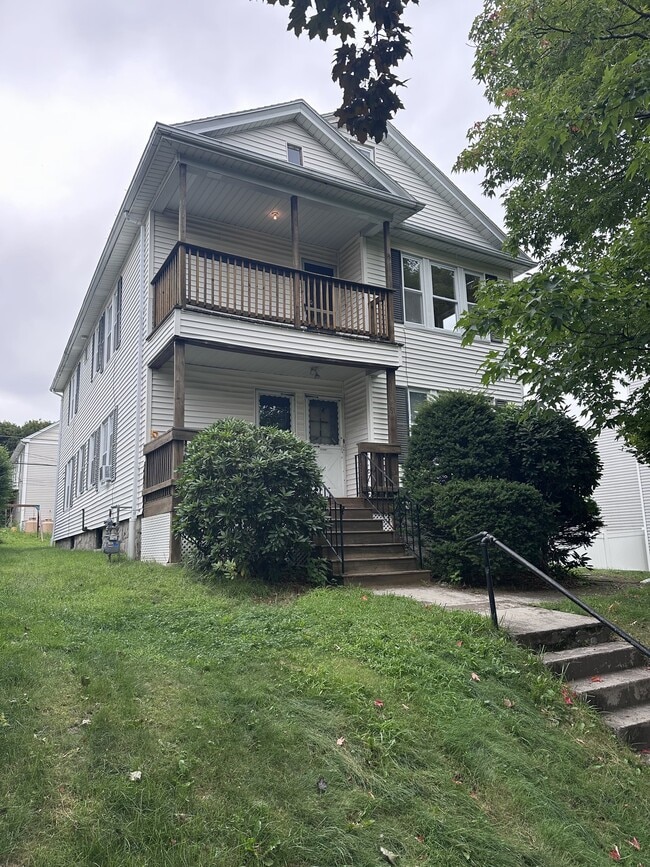
Worcester is the second-most populous city in Massachusetts and the undisputed anchor of Central New England, sitting near the geographic center of the state and earning its nickname, the Heart of the Commonwealth. It grew as an industrial powerhouse in the 19th century, and that history shows in its architecture, from converted mill buildings along the Canal District to the classic triple-decker neighborhoods that define much of the residential landscape. Several universities, including Clark University, Worcester Polytechnic Institute, and the College of the Holy Cross, give the city a strong educational foundation and a steady intellectual energy year-round. Neighborhoods range from the lively Shrewsbury Street corridor and the arts-forward downtown core to quieter hillside areas like College Hill and the green surroundings near Lake Quinsigamond. The housing stock reflects that range, with loft-style apartments in repurposed industrial spaces, mid-rise apartment communities near Union Station, and triple-deckers spread across walkable residential streets. The local economy has shifted toward healthcare and biotechnology, anchoring long-term growth while the city preserves its working-class roots. Renters looking for a genuine New England city with real neighborhood character, reasonable proximity to Boston, and a housing market that still offers options will find Worcester worth a close look.
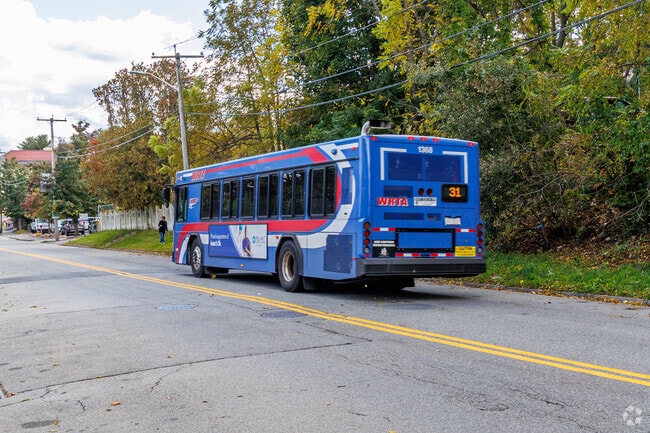
Worcester's transit system makes it easy to get around the city.
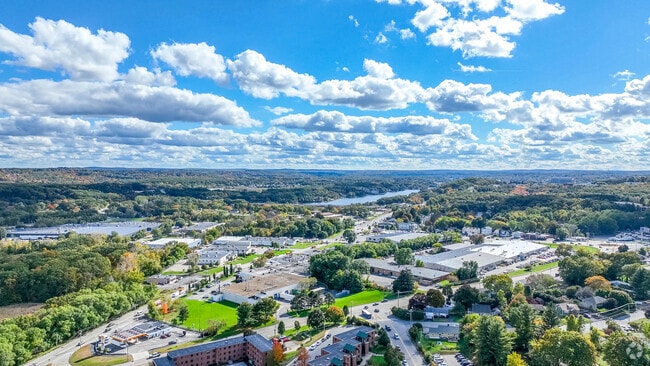
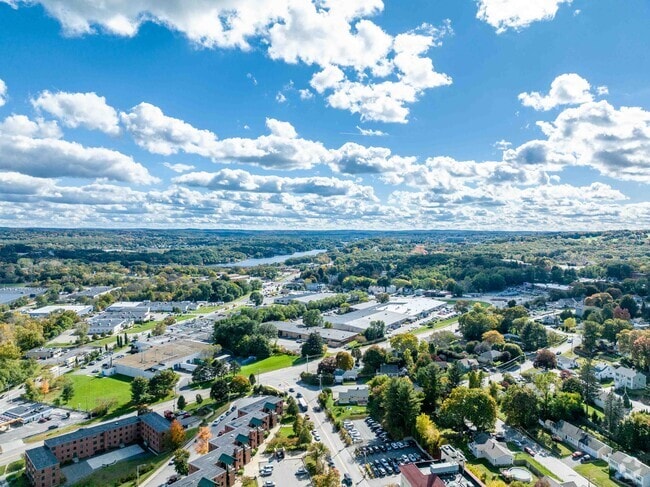
Aerial view of Worcester on a sunny day.
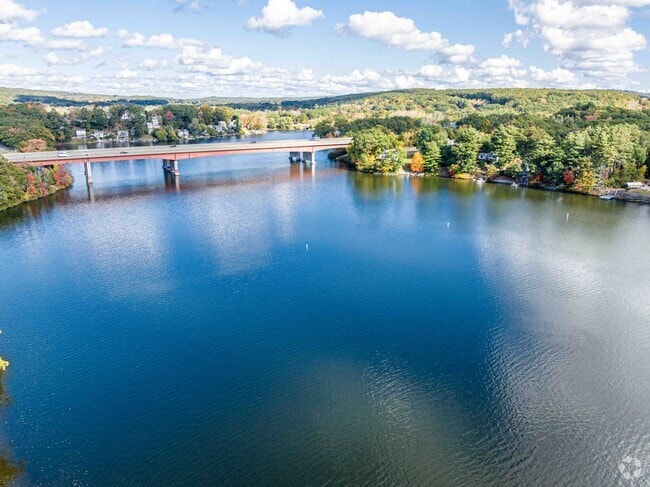
A scenic bridge across Lake Quinsigamond.
Residents can enjoy a sunny day skating at the rink in downtown Worcester.
For a great view of Lake Quinsigamond, stop by Coal Mine Brook Park.
Aaron Krock Memorial Park has a basketball court and three baseball diamonds.
Median Household Income
$59,247
Average: $79,779
Education
50,066
Residents Have a Degree
Job Market
93,695
Workers Employed
Median Age
37 Years
Largest Age Group
25-34 Years
Approximately 16% of Residents
Under 20
24%
Over 65
16%
Housing Distribution
Worcester has more renters than homeowners.

Education Distribution
Review this city's overall education levels.

As of September 2026, the average apartment rent in Worcester, MA is $1,644 for a studio, $1,836 for one bedroom, $2,102 for two bedrooms, and $2,366 for three bedrooms. Apartment rent in Worcester has decreased by -0.6% in the past year.

7 Best Places to Live in Massachusetts
Open to exploring your options? Discover other great cities in Massachusetts with our detailed guide.
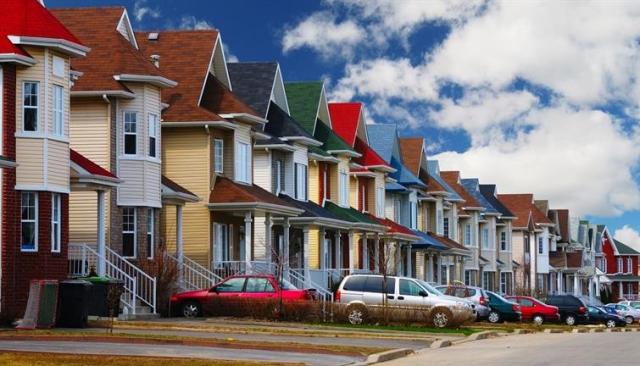
What Is Tandem Parking?
Tandem parking sounds simple, but there’s more to know before you rent.

A Checklist for First-Time Movers
From budgeting and packing to moving day, here’s a checklist for first-time movers before the big move.
Explore how walkable, bikeable, drivable, and transit-friendly Worcester, MA is for everyday living.
Moderately Walkable
Walkability
Some Public Transit
Transit
Moderately Drivable
Drivability
Fairly Bikeable
Bikeability

Public
Grades K-5
415 Students

Public
Grades PK-5
321 Students

Public
Grades K-5
292 Students
Abby Kelley Foster Charter Public School
Public
Grades K-12
1,426 Students

Public
Grades PK-5
605 Students
Abby Kelley Foster Charter Public School
Public
Grades K-12
1,426 Students
Public
Grades 6-8
954 Students

Public
Grades 6-8
938 Students

Public
Grades 6-8
781 Students
Public
Grades 6-8
679 Students
Massachusetts Academy for Math and Science at WPI
Public
Grades 9-12
98 Students

Abby Kelley Foster Charter Public School
Public
Grades K-12
1,426 Students
Public
Grades 9-12
1,756 Students
Public
Grades 9-12
1,756 Students
Public
Grades 9-12
1,409 Students
 The GreatSchools Rating helps parents compare schools within a state based on a variety of school quality indicators and provides a helpful picture of how effectively each school serves all of its students. Ratings are on a scale of 1 (below average) to 10 (above average) and can include test scores, college readiness, academic progress, advanced courses, equity, discipline and attendance data. We also advise parents to visit schools, consider other information on school performance and programs, and consider family needs as part of the school selection process.
View GreatSchools Rating Methodology
Data provided by
GreatSchools.org
© 2026. All rights reserved.
The GreatSchools Rating helps parents compare schools within a state based on a variety of school quality indicators and provides a helpful picture of how effectively each school serves all of its students. Ratings are on a scale of 1 (below average) to 10 (above average) and can include test scores, college readiness, academic progress, advanced courses, equity, discipline and attendance data. We also advise parents to visit schools, consider other information on school performance and programs, and consider family needs as part of the school selection process.
View GreatSchools Rating Methodology
Data provided by
GreatSchools.org
© 2026. All rights reserved.
† Our analysis of utilities, groceries, transportation, healthcare, home prices, and other goods and services is sourced from the Cost of Living Index, a respected benchmark published by the Council for Community and Economic Research (C2ER) that provides a thorough overview of living expenses across different regions.
Rent data is provided by CoStar Group’s Market Trend reports. As the industry leader in commercial real estate information, analytics, and news, CoStar conducts extensive research to produce and maintain a comprehensive database of commercial real estate information. We combine this data with public record to provide the most up-to-date rental information available.
Consumer goods, services, and home prices are sourced from the Cost of Living Index published by the Council for Community and Economic Research (C2ER). The data on this page is updated quarterly. It was last published in September 2026.
Demographic information comes from Neustar and combines detailed address data with U.S. Census and American Community Survey statistics to produce reliable local estimates.