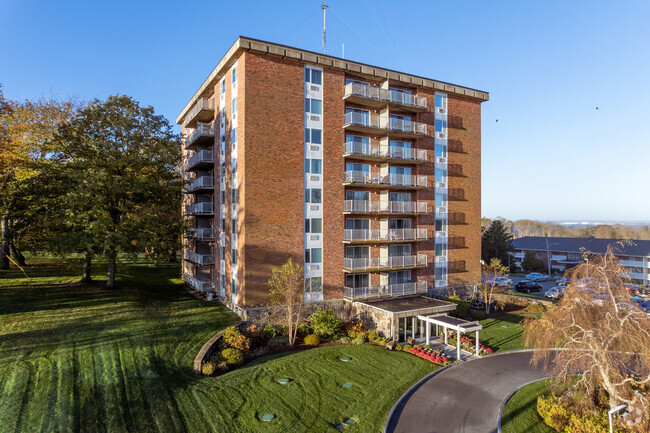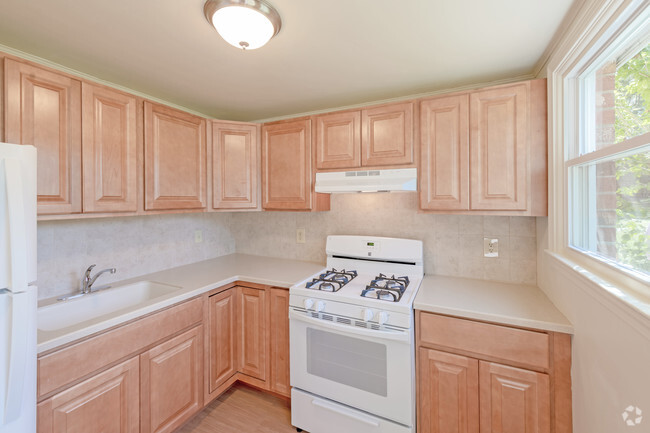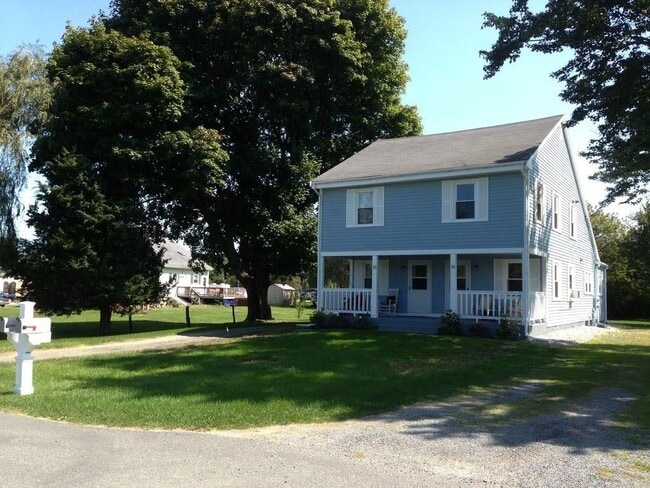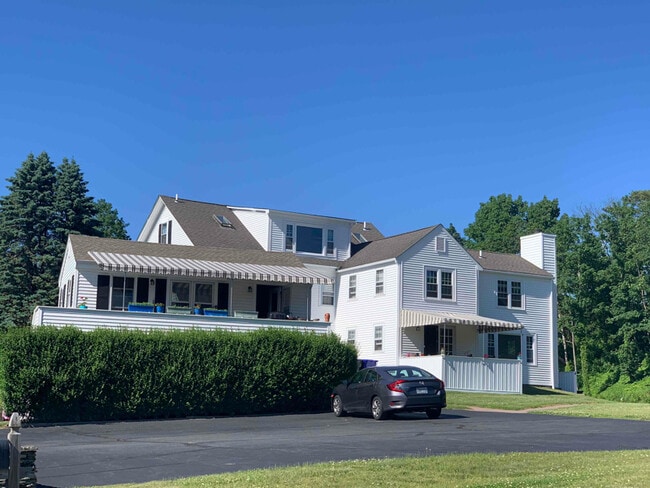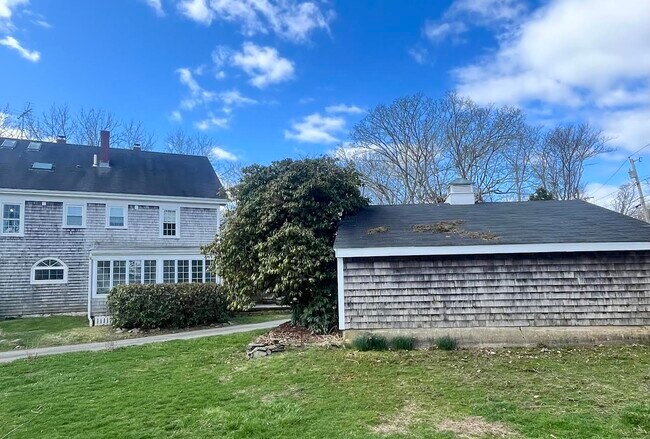
Ade Bethune House
110 Bristol Ferry Rd,
Portsmouth, RI 02871
$1,308 - $2,512
1-2 Beds


Portsmouth sits on the northern end of Aquidneck Island in Newport County, sharing that landmass with Middletown and the well-known city of Newport to the south. As the second-oldest municipality in Rhode Island, it carries genuine historical weight — the town was one of four original settlements that formed the Colony of Rhode Island and Providence Plantations in the 17th century. Today it operates as a quiet, coastal community spread across roughly 39 square miles of land, with Narragansett Bay defining much of its character and geography.
Life here moves at a measured pace. Residents have easy access to the energy of Newport without being absorbed by it, and Providence sits within about 30 miles to the northwest. The housing mix reflects the town's suburban scale — single-family homes dominate, but apartment communities and smaller multi-unit rentals provide options for those seeking lower-maintenance living. The rental market aligns with broader Rhode Island trends, which rank among the higher-cost states in the Northeast. Portsmouth draws renters who want proximity to the coast and to Aquidneck Island's employment base, including the Naval Station Newport, without paying Newport prices or trading the sense of space that this northerly stretch of the island quietly offers.
As of April 2026, the average apartment rent in Portsmouth, RI is $1,300 for a studio, $1,856 for one bedroom, and $2,046 for two bedrooms. Apartment rent in Portsmouth has increased by 1.2% in the past year.
Explore how walkable, bikeable, drivable, and transit-friendly Portsmouth, RI is for everyday living.
Not Walkable
Walkability
Exceptionally Drivable
Drivability
Somewhat Bikeable
Bikeability

Public
Grades K-5
426 Students

Public
Grades PK-5
342 Students
Public
Grades K-8
616 Students

Public
Grades K-8
616 Students
Public
Grades 9-12
803 Students

 The GreatSchools Rating helps parents compare schools within a state based on a variety of school quality indicators and provides a helpful picture of how effectively each school serves all of its students. Ratings are on a scale of 1 (below average) to 10 (above average) and can include test scores, college readiness, academic progress, advanced courses, equity, discipline and attendance data. We also advise parents to visit schools, consider other information on school performance and programs, and consider family needs as part of the school selection process.
View GreatSchools Rating Methodology
Data provided by
GreatSchools.org
© 2026. All rights reserved.
The GreatSchools Rating helps parents compare schools within a state based on a variety of school quality indicators and provides a helpful picture of how effectively each school serves all of its students. Ratings are on a scale of 1 (below average) to 10 (above average) and can include test scores, college readiness, academic progress, advanced courses, equity, discipline and attendance data. We also advise parents to visit schools, consider other information on school performance and programs, and consider family needs as part of the school selection process.
View GreatSchools Rating Methodology
Data provided by
GreatSchools.org
© 2026. All rights reserved.
† Our analysis of utilities, groceries, transportation, healthcare, home prices, and other goods and services is sourced from the Cost of Living Index, a respected benchmark published by the Council for Community and Economic Research (C2ER) that provides a thorough overview of living expenses across different regions.
Rent data is provided by CoStar Group’s Market Trend reports. As the industry leader in commercial real estate information, analytics, and news, CoStar conducts extensive research to produce and maintain a comprehensive database of commercial real estate information. We combine this data with public record to provide the most up-to-date rental information available.
Consumer goods, services, and home prices are sourced from the Cost of Living Index published by the Council for Community and Economic Research (C2ER). The data on this page is updated quarterly. It was last published in February 2026.
Demographic information comes from Neustar and combines detailed address data with U.S. Census and American Community Survey statistics to produce reliable local estimates.