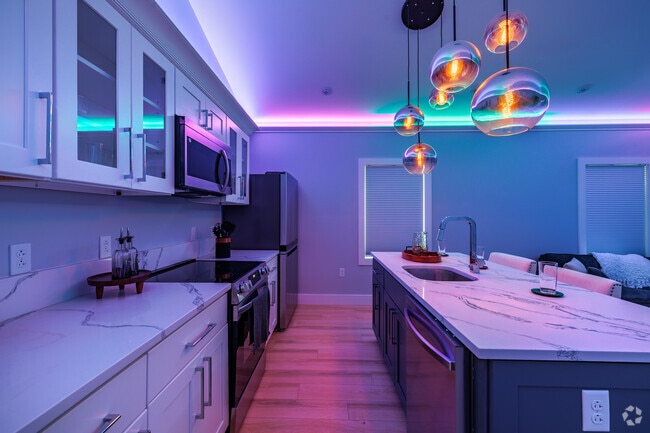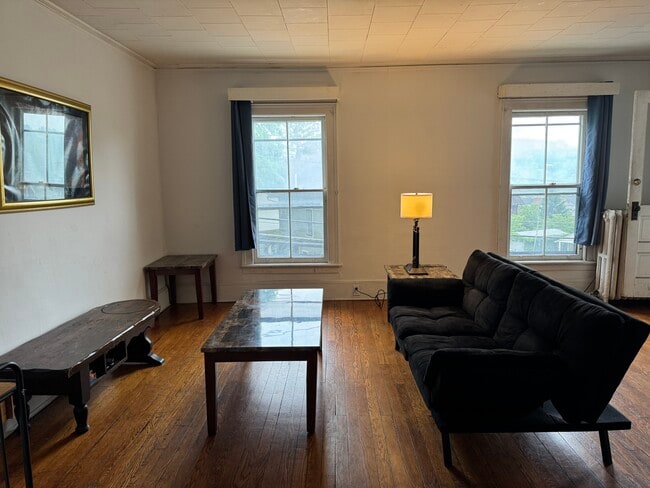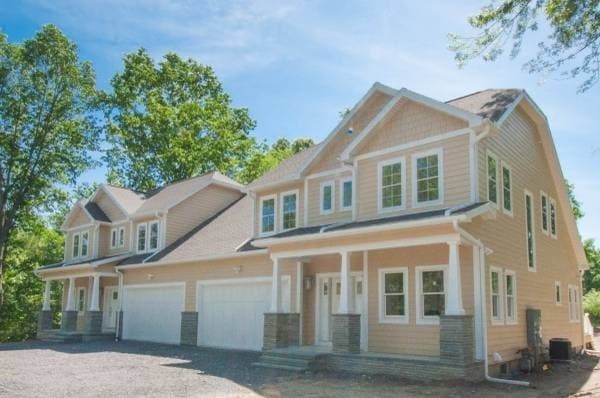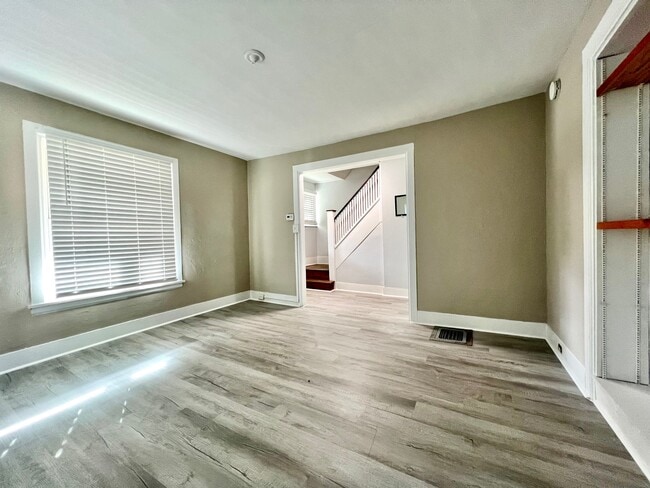
Library Place
105 W Court St,
Ithaca, NY 14850
$2,575 - $3,900
1-2 Beds
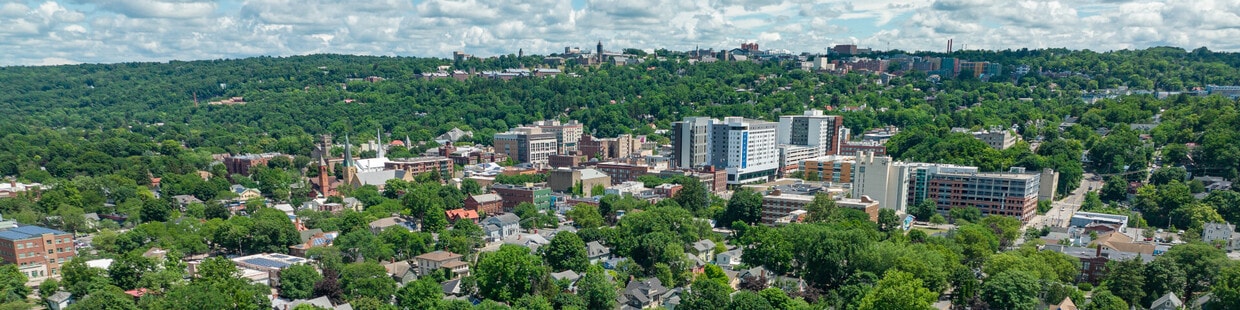
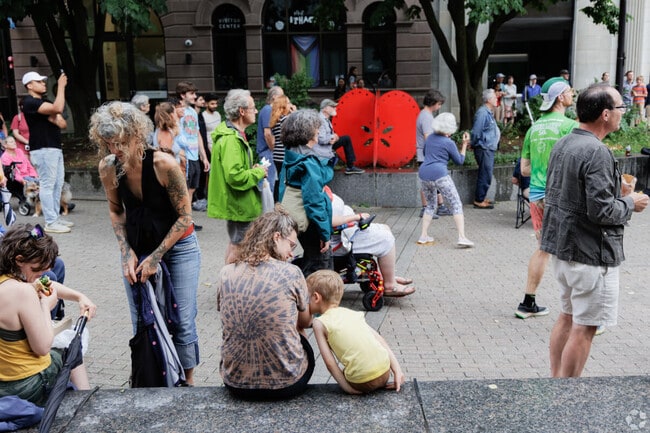


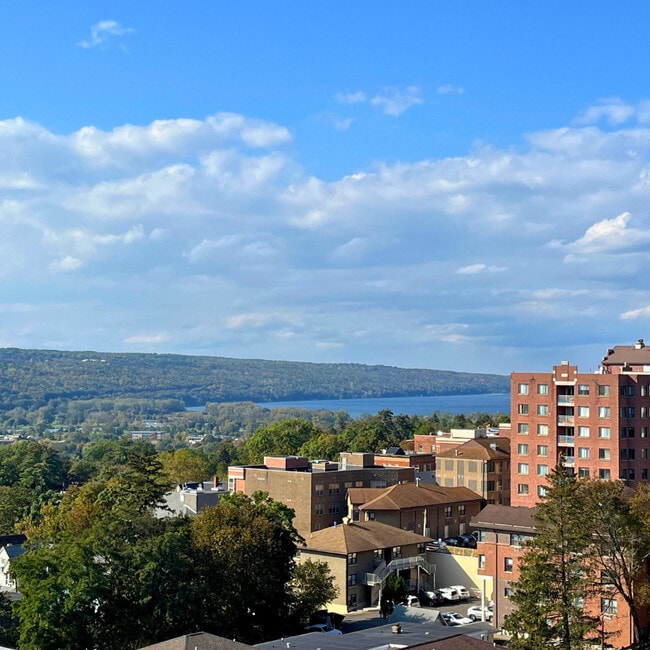
Nestled in the heart of the Finger Lakes region, Ithaca combines natural beauty with a thriving academic atmosphere as home to both Cornell University and Ithaca College. Located on the southern shore of Cayuga Lake, the city features more than 150 waterfalls within 10 square miles, including Ithaca Falls, while the surrounding gorges and state parks provide year-round outdoor recreation opportunities. Current rental trends show average apartment rates ranging from $1,690 for studios to $2,090 for two-bedroom units.
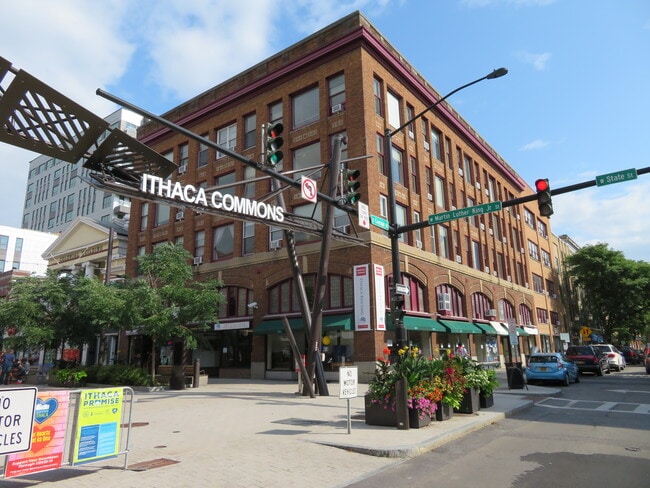
Downtown Ithaca centers around the pedestrian-friendly Ithaca Commons, where local shops, restaurants, and entertainment venues create a welcoming community atmosphere. The city offers diverse housing options across several neighborhoods. Fall Creek features historic architecture and tree-lined streets, while areas near Cornell University provide easy access to campus amenities. South Hill offers proximity to Ithaca College, and Belle Sherman sits conveniently close to Cornell's campus. The city hosts numerous community events throughout the year, including the annual Ithaca Festival. The Ithaca Farmers Market, operating year-round, showcases fresh produce and artisanal goods from across the region.
Paddle boarding is one of the most popular water activities in Ithaca.
Ports of New York is a popular winery in Ithaca with a French history and heritage.
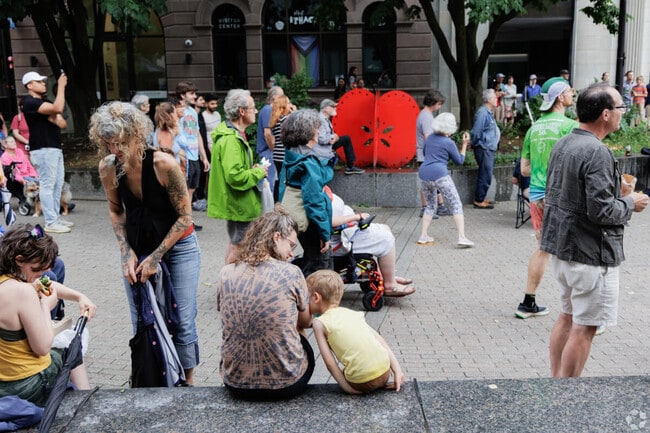
The Commons hosts a plethora of seasonal events, including Ithaca Festival.
As of March 2026, the average apartment rent in Ithaca, NY is $1,686 for a studio, $1,868 for one bedroom, $2,111 for two bedrooms, and $2,281 for three bedrooms. Apartment rent in Ithaca has decreased by -1.0% in the past year.
The cost of living in Ithaca, NY is 3.0% higher than the national average. Generally, housing in Ithaca is 0.3% less expensive than the national average, with rent falling between $1,680 - $2,271. You can expect to pay 4.1% less for groceries, 6.2% more for utilities, and 16.3% more for transportation.
Explore how walkable, bikeable, drivable, and transit-friendly Ithaca, NY is for everyday living.
Somewhat Walkable
You might be able to get out and walk when living in this area. Some errands can be accomplished on foot, but for others you’ll need a car.
Bikeable
While there’s some bike infrastructure in this area, you’ll still need a car for many errands.
Cayuga Heights Elementary School
Public
Grades K-5
270 Students

Public
Grades PK-5
363 Students

Public
Grades K-5
347 Students

Public
Grades PK-5
217 Students

Public
Grades PK-5
165 Students

Public
Grades 6-8
513 Students
Public
Grades 6-8
559 Students
Public
Grades 1-12
293 Students

Public
Grades 9-12
1,411 Students
Public
Grades 1-12
293 Students
 The GreatSchools Rating helps parents compare schools within a state based on a variety of school quality indicators and provides a helpful picture of how effectively each school serves all of its students. Ratings are on a scale of 1 (below average) to 10 (above average) and can include test scores, college readiness, academic progress, advanced courses, equity, discipline and attendance data. We also advise parents to visit schools, consider other information on school performance and programs, and consider family needs as part of the school selection process.
View GreatSchools Rating Methodology
Data provided by
GreatSchools.org
© 2026. All rights reserved.
The GreatSchools Rating helps parents compare schools within a state based on a variety of school quality indicators and provides a helpful picture of how effectively each school serves all of its students. Ratings are on a scale of 1 (below average) to 10 (above average) and can include test scores, college readiness, academic progress, advanced courses, equity, discipline and attendance data. We also advise parents to visit schools, consider other information on school performance and programs, and consider family needs as part of the school selection process.
View GreatSchools Rating Methodology
Data provided by
GreatSchools.org
© 2026. All rights reserved.
61
Communities
22,939
Units
47
Cities

31
Communities
8,839
Units
22
Cities
10
Communities
864
Units
8
Cities

13
Communities
1,572
Units
9
Cities
3,489
Communities
959,639
Units
894
Cities

159
Communities
26,767
Units
111
Cities
† Our analysis of utilities, groceries, transportation, healthcare, home prices, and other goods and services is sourced from the Cost of Living Index, a respected benchmark published by the Council for Community and Economic Research (C2ER) that provides a thorough overview of living expenses across different regions.
Rent data is provided by CoStar Group’s Market Trend reports. As the industry leader in commercial real estate information, analytics, and news, CoStar conducts extensive research to produce and maintain a comprehensive database of commercial real estate information. We combine this data with public record to provide the most up-to-date rental information available.
Consumer goods, services, and home prices are sourced from the Cost of Living Index published by the Council for Community and Economic Research (C2ER). The data on this page is updated quarterly. It was last published in February 2026.