LiveWell Apartments
550 Wood St,
Pittsburgh, PA 15222
$1,470 - $4,370
Studio - 3 Beds



Area Guide
Tucked between Liberty Avenue and the Allegheny River, Pittsburgh’s Cultural District feels like downtown’s bright marquee, always lit and ready for a show. Historic theaters line the streets, their facades glowing at night while people stream in for concerts, touring Broadway productions, and symphony nights.
Between performances, you can wander past galleries, small parks, and public art pieces that break up the city blocks, with the river just a short walk away for a quieter view of the skyline. The area sits right in the heart of downtown, so offices, transit stops, and Market Square are all close enough to reach on foot.
Day-to-day life here revolves around what is happening on stage and on the sidewalks. On any given week, marquees at places like Heinz Hall, Benedum Center, and the O’Reilly Theater advertise everything from classical concerts to experimental plays, all grouped together by the City of Pittsburgh as key Cultural District venues.
Side streets tuck in coffee shops, late-night spots, and after-work hangouts, so you can grab a bite before a show or linger afterward while the streets slowly empty. Buses and light rail crisscross nearby, making it simple to get to campuses like Point Park University’s downtown home base or to other neighborhoods when you want a change of scenery.
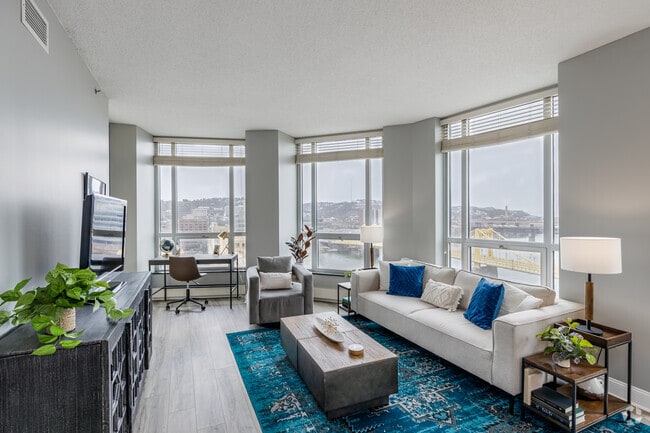
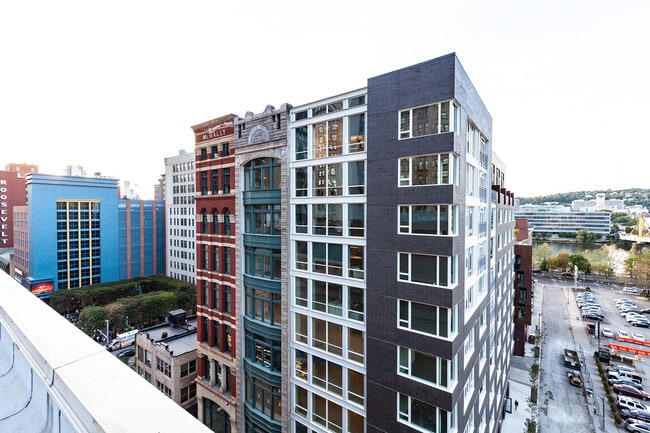
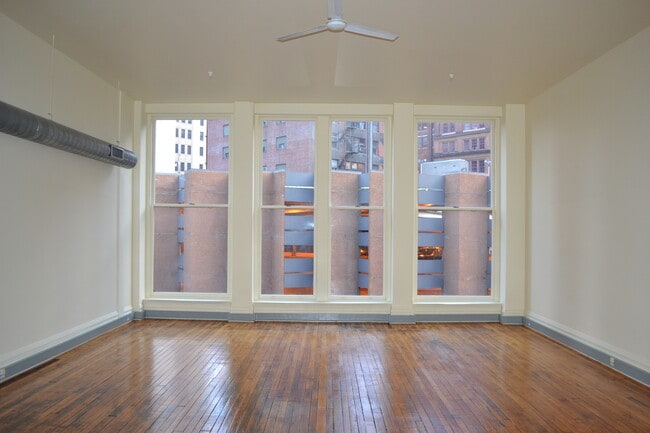
Renting in the Cultural District usually means living above the action. Many apartment communities sit in renovated brick buildings where upper floors have been converted into loft-style studios and one-, two-, or three-bedroom apartments with tall windows that overlook Penn Avenue or the river. Newer residential towers add modern finishes, fitness centers, and rooftop lounges while still keeping you within a few blocks of theaters and galleries.
Residents see their neighborhood highlighted on city event calendars all year, with art showcases, concerts, and cultural programs spilling into nearby streets and parks, so it often feels like your front door opens straight into Pittsburgh’s arts scene.
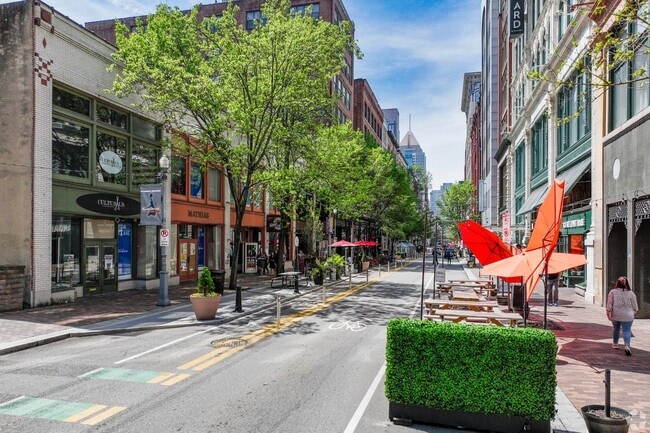
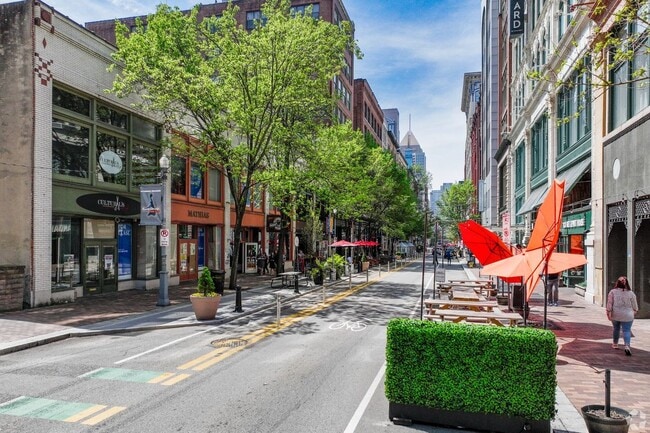
Shops line the streets in the Cultural District.
The Cultural District has distinctive architecture.
A popular sidewalk cafe in the Cultural District.
As of September 2026, the average apartment rent in Cultural District is $1,457 for a studio, $1,629 for one bedroom, $2,413 for two bedrooms, and $4,320 for three bedrooms. Apartment rent in Cultural District has increased by 3.1% in the past year.
Studio
545 sq ft
Average Sq Ft
$1,457/month
Average Rent
1 BR
737 sq ft
Average Sq Ft
$1,629/month
Average Rent
2 BR
1,345 sq ft
Average Sq Ft
$2,413/month
Average Rent
3 BR
1,773 sq ft
Average Sq Ft
$4,320/month
Average Rent
Explore how walkable, bikeable, drivable, and transit-friendly Cultural District - Pittsburgh, PA is for everyday living.
Exceptionally Walkable
Walkability
Exceptional Public Transit
Transit
Moderately Drivable
Drivability
Very Bikeable
Bikeability
In Cultural District - Pittsburgh, PA, daily errands are quick and hassle-free.
Supermarket Within a 5 Minute Walk
Groceries
Exceptional Restaurant Variety Nearby
Restaurants
Exceptional Café Variety Nearby
Cafes
Exceptional Variety of Shops Nearby
Shopping
Cultural District - Pittsburgh, PA provides ample green space and fitness centers within easy reach.
Very Large Amount of Park Space Nearby
Parks
Good Wellness Amenity Variety Nearby
Wellness
Get a sense of what it’s like to live in Cultural District - Pittsburgh, PA from everyday activity to noise and nightlife.
Highly Vibrant Atmosphere
Vibrancy
Exceptional Nightlife Variety Nearby
Nightlife
Fairly Noisy
Quiet Score

† Our analysis of utilities, groceries, transportation, healthcare, home prices, and other goods and services is sourced from the Cost of Living Index, a respected benchmark published by the Council for Community and Economic Research (C2ER) that provides a thorough overview of living expenses across different regions.
Rent data is provided by CoStar Group’s Market Trend reports. As the industry leader in commercial real estate information, analytics, and news, CoStar conducts extensive research to produce and maintain a comprehensive database of commercial real estate information. We combine this data with public record to provide the most up-to-date rental information available.
Consumer goods, services, and home prices are sourced from the Cost of Living Index published by the Council for Community and Economic Research (C2ER). The data on this page is updated quarterly. It was last published in September 2026.
Demographic information comes from Neustar and combines detailed address data with U.S. Census and American Community Survey statistics to produce reliable local estimates.