

One of the most important terms to know when searching for affordable housing is Area Median Income (AMI). In the simplest terms, it is the middle point for income in a given area. This is important to remember because many programs and apartment communities use a percentage of the AMI to determine who qualifies and for what. However, AMI isn’t quite that simple; its calculation and usage adds a lot of nuances that affect renters in different ways. This article breaks down everything you need to know about AMI, so no matter where you encounter it, you'll know exactly what it means.
Key Takeaways
- Area Median Income (AMI) is the income level that splits an area's households exactly in half: half earn more, half earn less. It's set annually by HUD and forms the baseline for most affordable housing eligibility.
- Income limits are a percentage of AMI, and the percentage depends on the program: HUD's own programs typically use 30%, 50%, or 80% of AMI, while LIHTC properties usually use 30%, 50%, or 60%. The same AMI figure can translate into different qualifying income limits depending on which program or property you're applying to.
- Because AMI is based on a 4-person household, income limits are adjusted up for larger households and down for smaller ones. Always check the limit for your specific household size, not just the overall area figure.
Your Income, Ranked: What AMI Actually Measures
AMI is a central measurement that governments, programs, apartment communities, and more use to figure out who is eligible for affordable housing assistance and income-restricted units.
More specifically, it is the midpoint of household incomes in a specific area. So, it divides households into equal parts where one half has an income above the midpoint, and the other below it. It is commonly used as the baseline, with income limits calculated as a percentage of the AMI. For example, the low-income limit could be 80 percent of the AMI.
How AMI Is Used
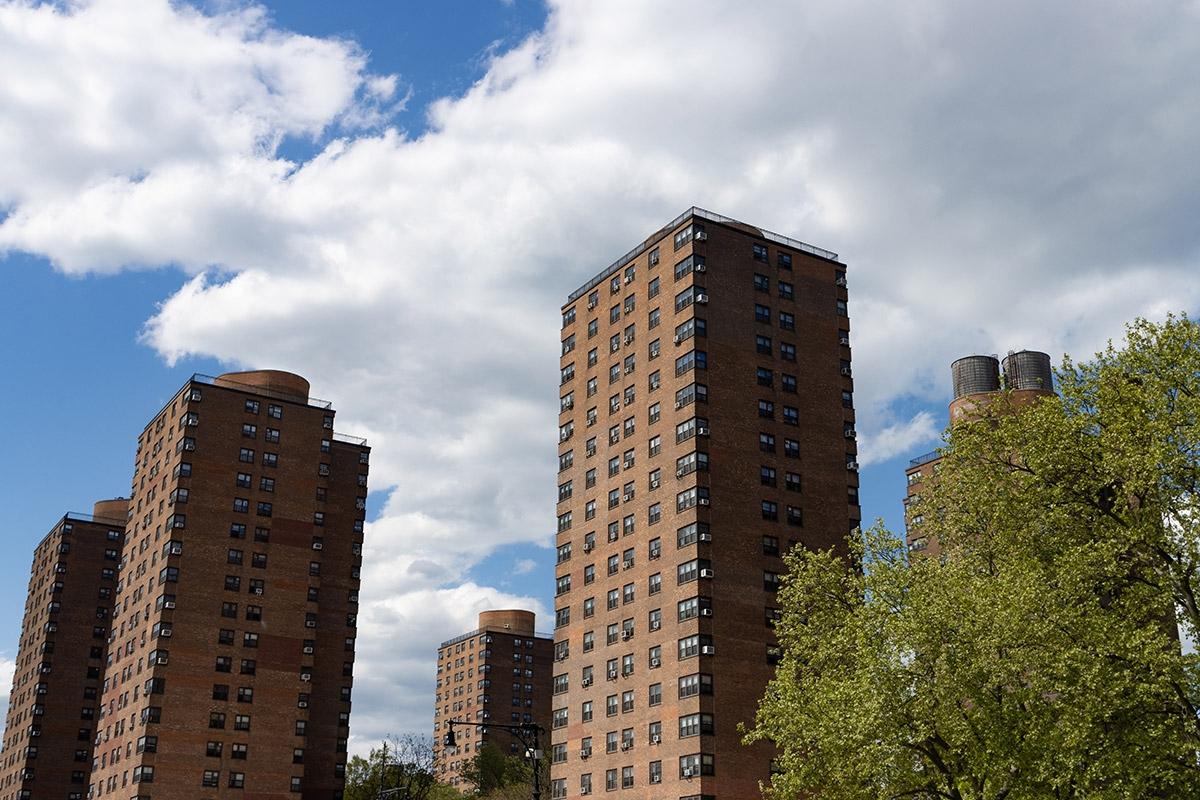
AMI is used across the housing industry by a variety of different programs in a variety of different ways. Here are some of the common places renters may encounter AMI:
- Eligibility for income-restricted apartment communities: Some communities or specific units are income restricted, meaning that renters must have an annual gross household income below the community’s income limits. Those limits are generally calculated using AMI.
- Eligibility for housing assistance programs: there are many housing assistance programs for renters, including those run by the government and other organizations. These often have income limits that determine eligibility, and those limits are based on AMI.
- Rent limits and increases: Income limits, based on AMI, are used to calculate the max rents allowed under certain programs like the HOME and Low-Income Housing Tax Credit (LIHTC) incentive. Since HUD updates AMI every year, the maximum allowed rent can also change annually, even if a tenant's income stays the same, though there are caps to rent increases as well. Additional rules and exceptions can also affect how much rent actually rises each year.
- Recertification: Program rules determine whether and how often household income must be recertified (often using AMI), how assets are treated, and what happens if income rises after move-in.
AMI mainly establishes income eligibility thresholds; it determines who qualifies for a unit or program. It doesn’t actually determine a property’s rent, rather rent limits for programs and properties are calculated using AMI-based income limits, while market-rate rents outside these programs are set independently.
Who Sets the Number (And Why It Changes Every Year)
The Department of Housing and Urban Development (HUD) is responsible for calculating the AMI, and it primarily bases it off of data from the Census Bureau’s American Community Survey (ACS), as well as other sources.
These calculations are done for every area in the country. Governments use the AMI to determine income limits that determine whether a household is eligible for housing assistance, housing programs, and income-restricted properties. Income limits are generally percentages of the AMI and vary by the number of people in a household.
Why your household size changes your number
Household size also matters. The AMI is generally based upon a four-person household. Then, the limit is adjusted up for larger households and down for smaller ones. The reason for this is that a bigger household needs a larger income to cover the same basic living expenses, so the max income level scales with the household size. Remember, the income limit reflects the household’s total income, not income per person.
Decoding AMI Percentages

The AMI depends on the apartment community and program, rather than the renter. Different programs and laws look at different percentages. Income limits are based off of specific percentages of the AMI, as well as factoring in the household size. There are two common programs renters will encounter: HUD general guidelines and Low-Income Housing Tax Credit (LIHTC).
HUD income limits: 30%, 50%, and 80% AMI
HUD publishes its own general income limits for programs like public housing, Section 8 Housing Choice Vouchers, and other HUD rental assistance programs. These limits determine who qualifies for HUD-assisted housing, and they're published annually through HUD's Income Limits Data for HUD Housing Assistance Programs. Many federal, state, and other programs also rely on these same AMI figures.
They're calculated each year based on the area's AMI (sometimes referred to as the median family income, MFI, by HUD) and are generally divided into three categories:
- Low: 80 percent of AMI
- Very low: 50 percent of AMI
- Extremely low: About 30 percent of AMI, with additional guidelines tied in.
Low-Income Housing Tax Credit (LIHTC) and the Average Income Test: why most income-restricted listings say 30%, 50%, or 60% AMI or other percentages
When looking at income-restricted communities and units, the percentages differ from the HUD limits because these properties are tied to the Low-Income Housing Tax Credit (LIHTC). HUD collectively refers to these projects as Multifamily Tax Subsidy Projects (MTSPs), which includes both LIHTC properties and projects financed with tax-exempt housing bonds.
The LIHTC gives state and local housing agencies tax credits to hand out to developers for buying, fixing up, setting aside units, or building new rental housing for people with lower incomes. In exchange, these communities agree to market a set number of units to renters who meet specific income limits.
HUD's MTSP Income Limits determine both qualification levels and maximum rent for these properties. How many units a property has to set aside, and at what income level, depends on which percentage of AMI it uses. The three categories are:
- 60 percent of AMI: The most common threshold, tied to the federal "40-60" rule, where at least 40 percent of a property's units must be affordable to households earning 60 percent or less of AMI.
- 50 percent of AMI: Tied to the federal "20-50" rule, where at least 20 percent of a property's units must be affordable to households earning 50 percent or less of AMI.
- 30 percent of AMI: Not part of the original federal minimum, but commonly added when a property combines LIHTC with other funding sources (like HOME funds or a state housing trust fund) or when a state's Qualified Allocation Plan requires deeper affordability to award the credits. A 30 percent AMI unit can also exist without outside funding when a community elects the Average Income Test.
The Average Income Test allows communities to designate units anywhere from 20 to 80 percent, as long as the average across all units doesn’t exceed 60 percent and at least 40 percent of the units must be rent restricted. Under this option, a 30 percent AMI unit can count toward a community’s LIHTC set-aside on its own, without needing to be paired with an outside funding source.
Am I Under or Over? A Simple Way to Check Your AMI

Though many people say, “my AMI,” a more accurate phrase is “my area’s AMI.” AMI is tied to an area, rather than the person. The easiest way to know if your household qualifies for income limits is to check the estimates on Apartments.com. Here’s how:
- Find a listing with income limits. If a property has them, you'll see a callout box on the listing highlighting this, or you can scroll down to the "Fees and Policies" section to view the specific income restrictions.
- Click "Check income requirements." This opens the Income Qualification Calculator directly on the listing page.
- Enter your household details by inputting your household size and annual income.
- Get your result. The calculator will tell you instantly whether your household qualifies for that property's income-restricted units.
Alternatively, you can use the official HUD tables to find the applicable limit. Either option is easier and more reliable than trying to calculate your area’s AMI on your own, since the limits change each year and factor in variables that can significantly alter the result.
How HUD calculates the AMI
HUD starts with a geographic estimate of median family income and then applies program rules to publish official income limits. The exact methodology varies by fiscal year and program, so the official HUD table should be used rather than a simple percentage calculation. These are the basic steps that HUD takes to calculate AMI:
- Defines the geographic area: HUD generally uses a metropolitan Fair Market Rent area or a nonmetropolitan county.
- Uses Census income data: American Community Survey median family income data typically provides the underlying estimate.
- Updates the estimate: HUD adjusts older survey data to the relevant fiscal year.
- Applies statutory and policy adjustments: Floors, caps, unusually high or low housing costs, and other rules can affect the published limit.
- Adjusts for household size: HUD publishes different dollar limits for households of different sizes.
How HUD calculates AMI-based income limits for LIHTC properties
For LIHTC and tax-exempt bond properties, HUD publishes a separate set of numbers called Multifamily Tax Subsidy Project (MTSP) Income Limits. Rather than starting from scratch, these limits build directly on top of HUD's general income limits. There are a couple of additional steps needed to calculate AMI for LIHTC properties:
- Starts with HUD's Very Low-Income Limit (VLI): This is the same 50 percent AMI figure HUD already calculates for its general Section 8 income limits.
- Applies the LIHTC-specific multiplier: HUD's Very Low-Income Limit (50 percent AMI) is the starting point for every LIHTC percentage. To get any other tier, HUD multiplies that figure by the relevant multiplier for the matching percentage. This is why a property's AMI number won't exactly match HUD's general income limit figures.
- Adjusts for household size: Like HUD's general limits, MTSP figures are published for different household sizes, not just a single number per area.
AMI vs. Median Household Income: Not Quite the Same Thing
HUD commonly uses the term Median Family Income (MFI) or HUD Area Median Family Income (AMFI), which usually means the same as AMI. This is not always the same as a simple Census median household income figure. Median household income is simply the general term for the income that is the midpoint of all the incomes in the area, while AMI is the specific term for affordable housing.
Finding an Income-Restricted Apartment on Apartments.com
Once you know your area's AMI and which income limit applies to your household, the next step is finding communities that actually offer income-restricted units. Apartments.com makes this easy to filter for directly in your search.
On desktop or mobile, select the "Filter" option at the top of the page near the search bar. From there, scroll down to "Specialty Housing" and select "Low Income/Income Restricted" under "Additional Specialties." This narrows your results to communities that offer these units, so you're not sifting through listings one by one to figure out which ones qualify.
Once you've found a community that looks like a fit, read through the property's description for specifics on the type of low-income options available. If the details aren't fully spelled out, reach out to the property directly. They'll be able to confirm income limits for your household size and walk you through what documentation you'll need to apply.
This article is for general educational and informational purposes only and is not legal, financial, or housing advice. HUD's income limits, area median incomes, program rules, and calculation methods are updated periodically and can change without notice, and requirements may vary by property, program, and location. Before making any decisions related to eligibility, applications, or rent, always confirm current figures and requirements directly on HUD's website and with the specific apartment community, housing agency, or program administrator involved.
FAQs
How do I find my AMI?
Rather than trying to work out the calculation yourself, the simplest route is checking the estimate directly on Apartments.com. HUD's income limit tables also list the figures by area and household size. Either way, it's worth using one of these tools since AMI is recalculated annually and involves adjustments that are hard to calculate on your own.
What does AMI stand for?
AMI is short for Area Median Income, a benchmark used throughout the housing world to decide who's eligible for affordable and income-restricted housing. It marks the midpoint of household earnings in a given area, splitting households into an upper and lower half. HUD publishes an updated figure each year, and most income limits are set as some percentage of that number.
How do you find the median income of an area?
HUD builds this figure from Census Bureau American Community Survey data on median family income in a given area, then updates it to reflect the current fiscal year. From there, various policy adjustments come into play, including caps, floors, and cost-of-living factors specific to that region. Because the final numbers are broken out by household size and involve several moving parts, checking HUD's published tables is generally more accurate than estimating it yourself.


